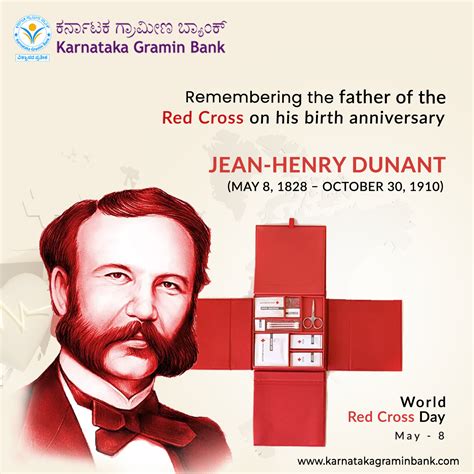
Henry Dunant: Founder of the Red CrossWhen we talk about organizations that embody compassion and global humanitarian aid, one name immediately springs to mind: the Red Cross. But have you ever stopped to wonder, “Who is the founder of Red Cross?” Guys, the incredible vision and tireless efforts of one man,
Henry Dunant
, are what brought this colossal movement into existence. His story is not just a historical account; it’s a powerful testament to how one individual’s empathy and determination can spark a global movement, changing millions of lives for the better. Dunant’s legacy is etched into the very fabric of emergency response and international humanitarian law. Let’s dive deep into the fascinating life of the man who dared to dream of a world where suffering on the battlefield could be alleviated, regardless of which flag a soldier fought under. Our journey begins by understanding the profound influence Dunant had, not just in establishing a relief organization, but in inspiring a fundamental shift in how the world approaches human suffering during conflict and disaster. His pioneering spirit laid the groundwork for an enduring legacy, ensuring that the principles of humanity, impartiality, and neutrality would guide aid efforts for generations to come.Henry Dunant wasn’t just a bystander; he was a revolutionary. Born in Geneva, Switzerland, in 1828, to a devout and philanthropic Calvinist family, he was instilled with values of social responsibility from a young age. His father was a businessman and a city councillor, and his mother was known for her charitable work. This upbringing undoubtedly shaped his worldview and laid the foundation for his future humanitarian endeavors. Though his formal education was cut short due to business failings in his youth, Dunant’s sharp intellect and an innate desire to make a difference were undeniable. He pursued various business ventures, from banking to colonial agricultural projects in Algeria, always with a keen eye for progress and innovation. However, it was a business trip that would serendipitously lead him to witness an event so horrific, so profoundly impactful, that it would forever alter the course of his life and, by extension, the course of humanitarian aid globally. This pivotal moment, a stark encounter with the indiscriminate brutality of war, would be the true
genesis of the Red Cross
. Dunant’s personal transformation from a businessman to a humanitarian icon is a story that truly inspires, demonstrating that sometimes, the greatest innovations arise not from grand designs, but from simple, urgent acts of human kindness in the face of overwhelming despair. This is where the story of the
founder of the Red Cross
truly begins, a narrative woven with threads of tragedy, compassion, and an unshakeable belief in the power of collective human action. His work ensured that the
Red Cross movement
became a beacon of hope, embodying the spirit of solidarity across borders and cultures.## The Horrors of Solferino: A Catalyst for ChangeImagine this, guys: it’s the year 1859, and Europe is engulfed in conflict. Henry Dunant, the man who would become the
founder of the Red Cross
, was on a business trip, hoping to secure an audience with Emperor Napoleon III to discuss his business ventures in French-occupied Algeria. His journey led him to Castiglione delle Stiviere, a small town in northern Italy, where he inadvertently stumbled upon the aftermath of one of the bloodiest battles of the 19th century: the Battle of Solferino. What he witnessed there would etch itself into his memory forever and serve as
the catalyst for the Red Cross
movement.The Battle of Solferino, fought on June 24, 1859, pitted the allied French and Sardinian armies against the Austrian army. It was a massive engagement involving hundreds of thousands of soldiers. When the fighting ceased, the fields were strewn with an unimaginable 40,000 wounded or dead soldiers. The sheer scale of the carnage was horrific. What made it even more agonizing was the complete lack of organized medical care for the wounded. Armies of the time had rudimentary medical services, but they were woefully unprepared for such a catastrophe. Soldiers lay neglected on the battlefield for days, suffering from grievous wounds, thirst, and exposure, often dying not from their injuries but from preventable complications or sheer neglect. Dunant, accustomed to the structured society of Geneva, was utterly appalled by the chaos and indifference he encountered. He saw men from all sides—French, Austrian, and Sardinian—dying side by side, their uniforms irrelevant in the face of agony. He described the scene as “a tragic chaos,” a “mass of suffering, despair, and anguish.”This experience ignited a fire within Dunant. He didn’t just stand by; he sprang into action. Without any official capacity or medical training, he took it upon himself to organize local women and volunteers from the nearby town to provide aid to the wounded. His rallying cry, “
Tutti fratelli
” (All brothers), transcended national loyalties and military affiliations. He procured supplies, arranged for makeshift hospitals in local churches and homes, and ensured that water and food reached the suffering. He personally tended to the wounded, regardless of their nationality, focusing solely on their shared humanity. He understood intuitively that suffering knew no flag, and compassion should know no boundaries. This extraordinary act of spontaneous, impartial aid on a scale never before witnessed was a pivotal moment. It was here, amidst the blood and cries of Solferino, that the very essence of what would become the Red Cross was born—the idea that assistance should be rendered to anyone in need, without discrimination, purely based on their suffering. This direct, raw encounter with the horrors of war and the subsequent improvised relief efforts became the most powerful inspiration for
founding the Red Cross
. Dunant’s actions laid the groundwork for the core principle of humanitarian aid: universality and impartiality in the face of human suffering. He literally carved out a path of mercy from the brutality of war, showing that even in the darkest moments, humanity can find a way to care for its own. It’s truly incredible how one person’s refusal to accept the status quo can lead to such monumental change, isn’t it? This powerful experience was truly
the catalyst for the Red Cross
, demonstrating Dunant’s profound understanding of human suffering and his unyielding desire to alleviate it.## A Call to Action:
